North Four Corners News ♦ June 2026
Part 2 of a Series
Montgomery County History Over 250 Years
By Sondra Katz
[This is the conclusion of a series on Montgomery County’s 250th birthday this year.]
19th Century Items of Interest (continued from last issue)
- Emancipation reached Maryland in 1864. By referendum and by a razor-thin margin, Marylanders voted to end slavery in the state after more than 200 years. Soldiers voting in the field in October 1864 ensured passage of the new Maryland State Constitution, which outlawed slavery effective 1 November. Seventy-three percent of Montgomery County voters did not approve.
- In 1860 public schools for white children were established but funding didn’t allow building many schools. Public schools for black children didn’t get started until 1872.
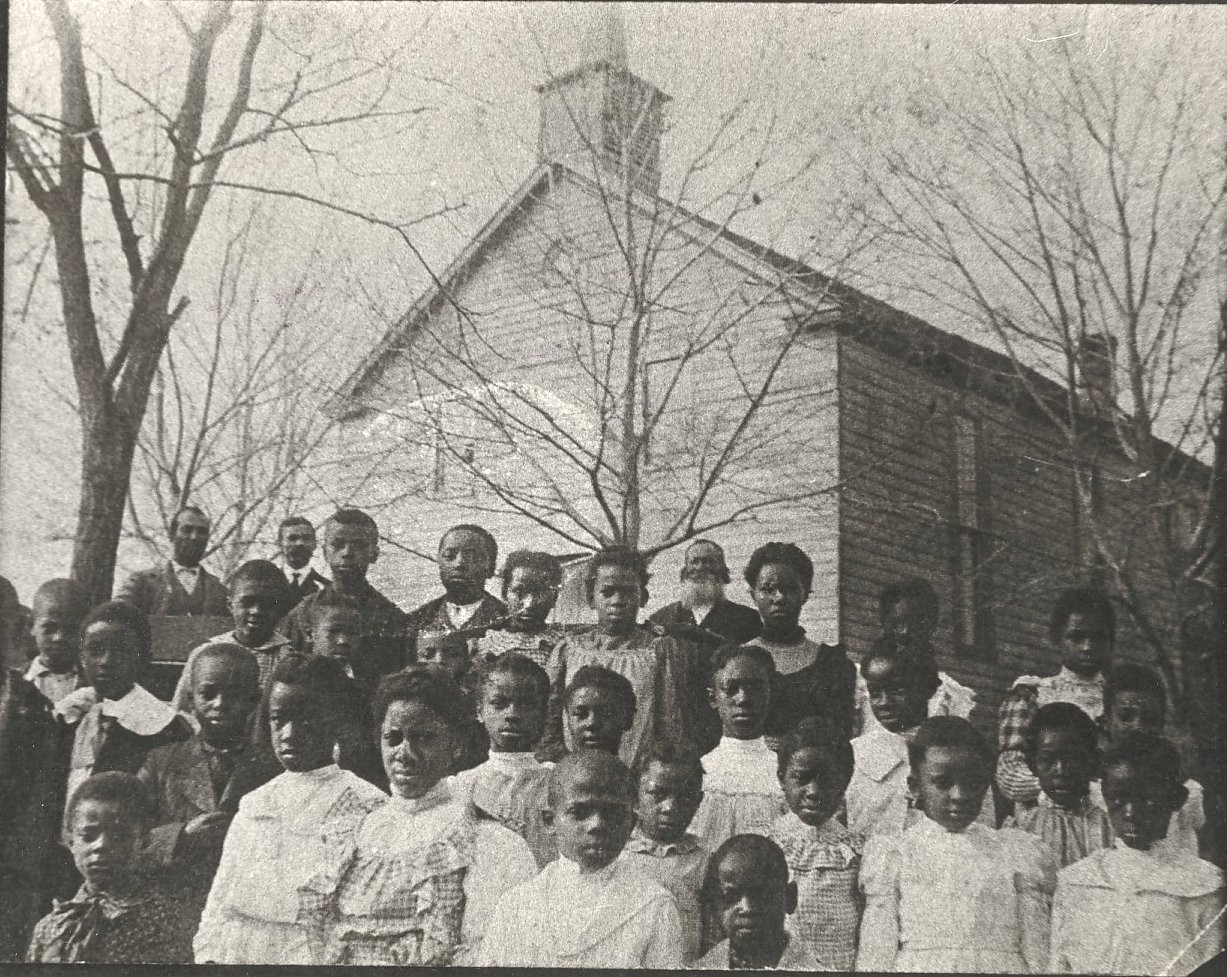
Poolesville School Class c. 1909. Behind the students is Loving Charity Hall, where classes were held downstairs. That building, now demolished, once stood behind the former Elijah Methodist Church on Elgin Road and served primarily as a community center.
- In 1864 Confederate troops under General Jubal Early skirmished with Union troops near Rockville en route to an unsuccessful attack on Fort Stevens in Washington. Union troops were commanded by Major General Frank Wheaton, who led troops stationed at the fort to successfully repel Early’s troops. Wheaton was named for the General in 1869.
- The Gaithersburg Observatory was built in 1899 was one of six global observatories established as part of the International Polar Motion Service in order to measure variations in latitude caused by the Earth’s wobble. The Gaithersburg observatory was in use until 1989. One of the survey monuments on the grounds of the observatory is still used to test the Global Positioning Systems (GPS).
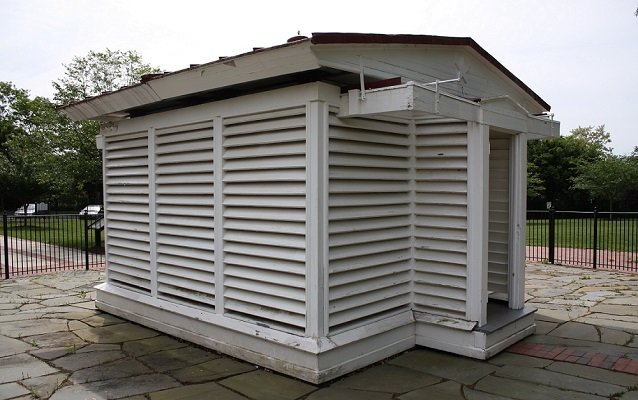
The Gaithersburg Latitude Observatory.
- Unfortunately, lynchings did occur in Montgomery County. Two men were hanged in 1880 and one man in 1896.
20th Century Items of Interest
- The Gibbs v. Broome case in 1936 for equal teacher salaries was a landmark case leading up to Brown v. Board of Education (1954). This case for equal salaries for teachers of both races was brought by William B. Gibbs, Jr., teacher and acting principal of Rockville Colored Elementary School who was represented by Thurgood Marshall and the NAACP. The case was settled out of court in Gibbs’s favor, but he was fired from his position with the schools.
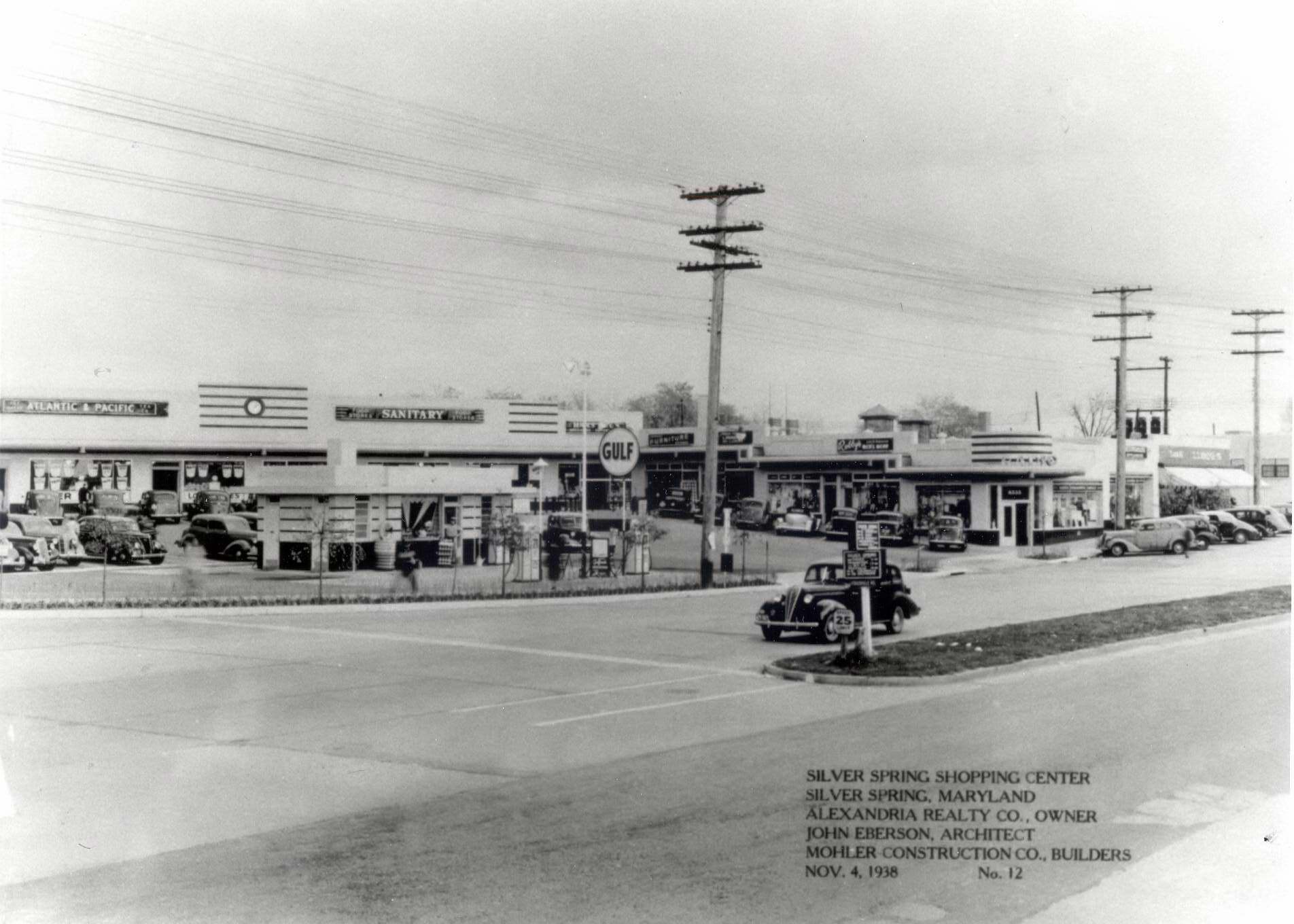
Photo of the Silver Spring Shopping Center taken near time of opening, 4 November 1938.
- The Silver Spring Shopping Center opened on 4 November 1938, which was the first suburban center in Montgomery County. Wheaton Plaza, the county’s first mall was opened in 1960.
- In 1948, Montgomery County voters approved a home rule charter with a Council-Manager government, the first county in Maryland to do so. The charter significantly increased local officials’ decision-making powers that heretofore largely lay in Annapolis.
- In 1950, the Montgomery County Public Library System was established.
- In 1950, Montgomery County was declared “An All-America Community” by the National Civic League. The Award recognizes communities that leverage civic engagement, collaboration, inclusiveness, and innovation to successfully address local issues.
- In 1955, Montgomery County was the first in Maryland to act on the Supreme Court’s order to desegregate “with all deliberate speed.” A limited number of elementary schools were integrated in the fall of 1955, with Black students residing downcounty, who were still attending substandard wood-frame schools built decades earlier, entering formerly all-white schools. The process, expanding gradually by area and grade level, was considered complete by 1961,when all the all-Black schools had been closed.
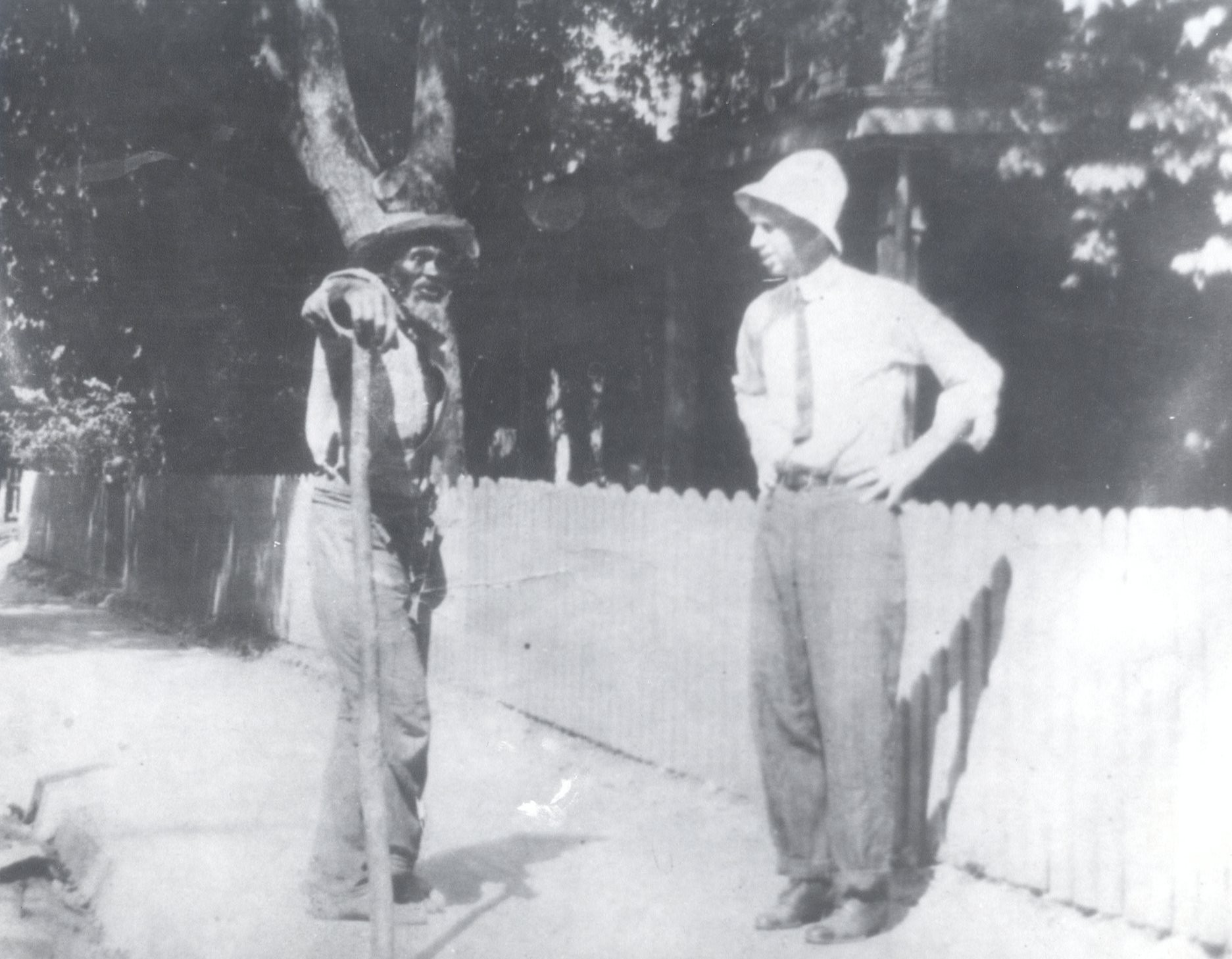
On the left is Joseph Crawford, pictured between 1910-1914, considered to be the last formerly enslaved person in Rockville still living at that time.
- Glen Echo Park was boycotted in 1960 for its refusal to allow Black patrons, beginning with a sit-in on the carousel by Howard University students. In 1961, the park opened to all races.
- On 16 January 1962, Montgomery County passed a law prohibiting racial and religious discrimination in places of public accommodation. It was the first county in Maryland to prohibit discrimination in public places, and two years ahead of the federal government’s Civil Rights Act, which made such discrimination illegal nationwide. An attempt to repeal the law in 1963, led primarily by newly elected county councilman John Hiser, was unsuccessful.
- In 1964, the Beltway was completed and, in 1978, Metrorail came to Montgomery County.
- In 1997 all of Takoma Park incorporated into Montgomery County.
21st Century Items of Interest
- In 2000, Montgomery County was declared “An All-America Community” by the National Civic League for a second time.
- In 2001, 11 county residents were killed on 9/11 and, in 2002, six county residents were killed by sniper attacks. Memorials were erected for both.
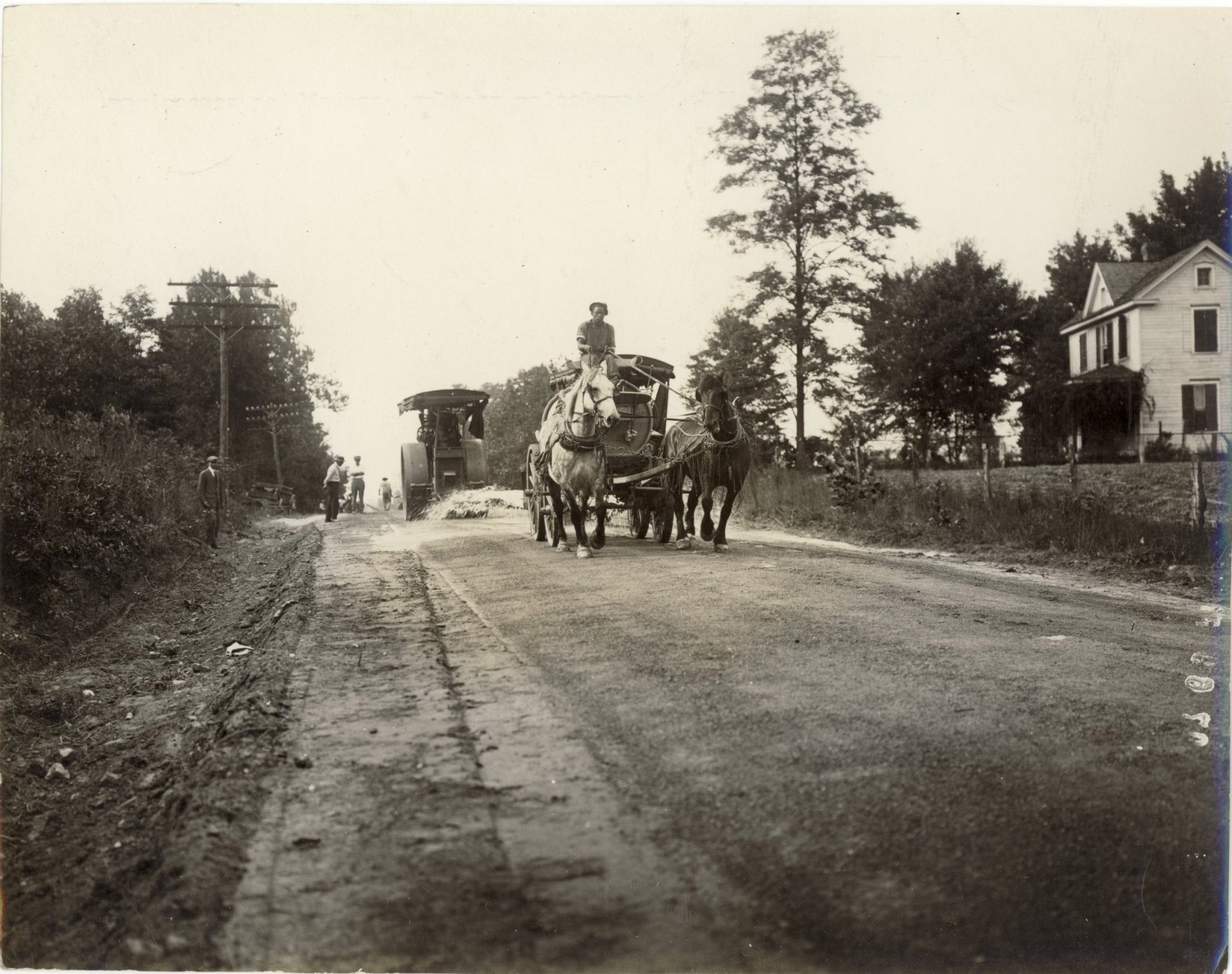
Road crews paving Rockville Pike with macadam in the late 19th century.
- By 2020, Montgomery County’s population exceeded one million. Census data shows that one-third of Montgomery County’s residents were born in another country and nearly 40 percent speak another language besides English. As of 2022, four of Montgomery County’s cities made the top-ten list of most diverse places in the United States: Germantown, Gaithersburg, Silver Spring, and Rockville.
Read Part 1
Read Entire Article
