 |
Stories from the NFCCA Newsletter, the “Northwood News” |
|
Stories from the NFCCA Newsletter, the “Northwood News” |
It all started one morning last October when I woke up with an itchy rash. I ignored it. I only took notice when it started spreading to more parts of my body. On the fifth day of the rash spreading, I saw my doctor. What she told me was to turn my family’s life upside down for the next couple of months.
“It looks like bed bug bites,” she said and called her colleague in for a second opinion. The second doctor concurred.
“Bed bug bites?” I said incredulously.
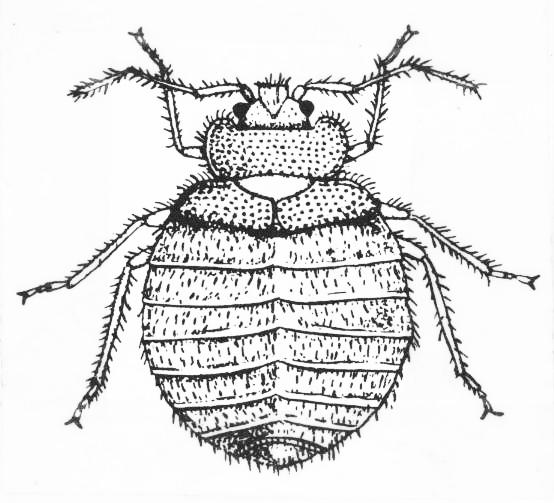
I dove into the Internet when I got home and quickly became a bed bug expert. I talked to a Cornell entomologist. I had three exterminators come over to inspect. I learned how to pronounce “diatomaceous earth,” an organic substance used for pest control. I became obsessed with finding a solution — and as non-toxic a one as possible.
I learned that there has been a surge in bed bug infestations in the U.S. in recent years and that it can be extremely difficult to get rid of the bugs — and to find them. Bed bugs are nocturnal creatures that hide in mattresses, wooden bed frames, furniture, or cracks in the floor or walls near the beds during the day. At night, they feast on human blood (thankfully, they are not disease-carrying) when the human is sleeping and then immediately go back into hiding. It’s unlikely that the person being bitten would feel them.
To this day, we have never seen a bed bug, except one that the first exterminator who came to inspect showed me, which he said he found under my daughter’s bed. I later came to wonder if he had planted it as I discovered that some of the information he had given me was grossly inaccurate. I wondered whether he was playing on the fears I was clearly displaying.
I also became deeply anxious about figuring out how the bed bugs might have gotten into our lives. The experts say that the usual culprits are: a trip involving a stay at a bed-bug-infested motel or hotel, a bed-bug-laden house guest, or the acquisition of used furniture (especially mattresses, wooden bed frames, or other furniture that was placed close to a bed). Occasionally, bed bug eggs may be laid in clothing and, therefore, second-hand clothing can also be the source.
In our case, we had two theories about how the bed bugs may have come to live with us. We had recently acquired a wooden-framed child’s chair with a dirty cover from the “As Is” department at IKEA. It is only in retrospect that we realized that it may have been a return rather than something that had been sitting around in a warehouse as we originally assumed.
After in-depth discussions with two of the exterminators and the Cornell entomologist, we embarked on a chemical-free approach to bed bug elimination. We learned that the best defense against bed bugs is vacuuming. We vacuumed all of the bedrooms aggressively. We banished the IKEA chair to the backyard and spent many hours over several weeks putting all of our clothing, bedding, and curtains into the dryer for 15 minutes per load (high heat for 15 minutes kills the bugs and any eggs) and packing the clothing into plastic storage boxes where it stayed for the next two months.
When I became overwhelmed by the work at one point, my dear friend and neighbor Cathy Lawler came over and emptied out my daughter’s closet, hauled the clothing to her house, threw it all in her dryer and returned it packaged, sorted, and labeled.
We bought bed-bug-proof mattress covers for our three beds. My husband sprayed the inside of the children’s dressers (theirs only since only they received used clothing) with Ethyl alcohol, which also kills the critters and their eggs. We bought metal bed frames for the two beds that were on the floor, applied petroleum jelly to the legs of the frames and moved them several inches away from the walls. Bed bugs cannot easily hide in metal frames the way they do in the crevices of wooden frames, and it is much more difficult for them to crawl up metal legs, especially if they have been coated with petroleum jelly.
One of the hardest parts of the whole experience was the psychological ramifications. The idea of the bugs crawling undetected over our bodies at night and sucking our blood drove us to do everything we could to banish them.
During the two-month period following the appearance of my rash, each of us got one or two bites from time to time. However, we were never sure they were bed bug bites. I never got anything like the rash I had in October again. The last time any of us had anything resembling a bite was in December.
I learned that beg bugs can live for over a year without a blood meal so it’s possible that if we had them, they are still here. We don’t know ... and we may never know. Whenever any one of us gets a red, itchy welt — even a mosquito bite — we are bound to wonder ... could it be? ■
© 2008 NFCCA [Source: https://nfcca.org/news/nn200804j.html]